




Pressure Washer Chemicals
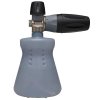
Pressure washing often involves various chemicals to enhance cleaning effectiveness, with the choice of chemical depending on the specific surface and type of dirt or staining being addressed. Common solutions include alkaline degreasers for removing oil and grease, sodium hypochlorite (bleach) for killing mold and mildew, and specialized surfactants that help break down dirt and improve the penetration of cleaning agents. These chemicals are typically applied as a pre-treatment before pressure washing or mixed into the washer's downstream injection system at carefully controlled dilution rates.
Safety and environmental considerations are crucial when using chemicals in pressure washing. Many cleaning agents can damage plants, harm aquatic life, or corrode certain surfaces if used improperly. Professional pressure washers need to understand chemical compatibility with different surfaces, proper dilution ratios, and local regulations regarding runoff containment. They should also use appropriate personal protective equipment including chemical-resistant gloves, eye protection, and sometimes respiratory protection depending on the chemicals being used and the application method.